copyright

Copyright 2007, 2008, 2009, 2010, 2011, 2012, 2013, 2014, 2015 for all original literary content by author(s)

20 February 2012

Eight Years Toward Thou

Eight years ago yesterday, I woke up as at-home-Dad, Priest and Vicar of small-town-Texas, Chaplain of USAF Axillary, reporter for small-town-Texas local paper, moonlighting as a school bus driver.

"A man was going down from Jerusalem to Jericho, and he fell among robbers, who stripped him and beat him, and departed, leaving him half dead. "

Eight years ago today, in spiritual terms, the sniper's bullet missed, and instead of taking my life in an instant, left me for dead, mortally wounded, behind enemy lines.

Eight years ago today, in spiritual terms, the arson's match lighted the fire which consumed all that I knew, all that I owned, and as I ran through the house trying to save those I loved, found that the arson had saved the children from the flames, but none had searched for me.

Eight years ago today, I woke up as a Daddy without children, a Priest without a church, a neighbor without a home, a son without parents, a husband without a wife, and grieving without being grieved.

----

There was a time, lying in the forest, blood seeping from the wound, when I raged at the dawning that none had come to search for me.  The sudden, bitter awareness that those I had considered "us" were, in fact, a "them."

I had always wanted to be the Good Samaritan, but it had not occurred to me that I would be the one left for dead on the side of the road-- that I would be the one to lay in an almost unconscious state to hear and see the priest and then the Levite walk by, shunning me for my misfortune.

But a Samaritan, as he journeyed, came to where he was; and when he saw him, he had compassion, and went to him and bound up his wounds, pouring on oil and wine; then he set him on his own beast and brought him to an inn, and took care of him.  And the next day he took out two denarii and gave them to the innkeeper, saying, 'Take care of him; and whatever more you spend, I will repay you when I come back.'  Which of these three, do you think, proved neighbor to the man who fell among the robbers?"  He said, "The one who showed mercy on him." And Jesus said to him, "Go and do likewise."
And wise men have written that the two denarii are the two Dominical Sacraments:  Baptism and Eucharist-- water and bread & wine which become the Body and Blood of Christ.  In other words, for what the world does to us, leaving us for dead, it is the mystical Church-- the Bride of Christ nourished by Christ himself which are given us.

Great, a fine mystical teaching of the purpose of the Church-- but it misses the point.

The point is that while we are told to be the Good Samaritan, we are also told that we are the traveler who is striped, beat up, robbed, and left for dead on the side of the road.

Who in the Church wants to hear that?  I didn't.

----

So, for a while, I waited for the Good Samaritan to come by, take me to bind up my wounds, take me to a safe place, and know that whatever the innkeeper would spend in my care, would be returned to him when the Good Samaritan returns.

Still waiting.

Now by chance a priest was going down that road; and when he saw him he passed by on the other side.  So likewise a Levite, when he came to the place and saw him, passed by on the other side

When the priest passed by, even taking the trouble to cross to the opposite side of the road to avoid me, my hopes were abused.  When the Levite did the same, I took it personally.  I was an "us" but they were a "them."

For a while, my rage haunted me-- mocked me, taunted:

"You!  Here you are unable to help yourself, and your rage is therefore both impotent and silent! 

"Ha!  When you had the power and raged against injustice, you contented yourself with action-- but now you see what it is to be empty of such power, but full of the rage! 

"Learn the lesson of life and the world! You are nothing!"
And I learned that lesson and in it, saw myself even more as a lonely "us" in a world of "thems."

There were a few "us" milling about-- the walking wounded with their distant stares-- half shock, half choosing not to see. 

And when I looked in the mirror, to my horror, I saw that same stare.  The realization that those powerless, voiceless, almost invisible "them" were my "us" and that my former "us" were really a dis-compassionate "them."

I didn't ask for it, I didn't desreve it, and the losses I had suffered were not too great to count-- but they were too great to concede.  But, conceded or not, the reality of it did not care.  The last part of the delusion was the hardest of all to admit as such.

My delusion was that such things only happened to those who deserved it-- it is the delusion of my culture, of society, and of the modern, western, affluent Church. The delusion that the world is just, that God rewards the lives of the good and punishes the lives of the wicked-- but that Satan (lies, hate begotten by fear) has no role, no power, and no say in it.

And then there was the second delusion that believing the first would not cost me my life-- and that denying the first delusion would not cost even more.

Rejecting that delusion ever more fully, I have begun (only begun) to realize that the many priests who I have seen crossing to other side of the road to pass by me, suffer more greatly because of their delusion than I do because of my wounds.  It is the delusion which blinds them and causes them to ignore what their souls scream out for them to do.

And for every Levite that passes me, looking the other way, it is the fear that if they look, the delusion will evaporate and they may find themselves striped, robbed, beaten and left for dead if they dare doubt the lie.

So it is that the delusional ones are pitiable in their blindness and are my "us" after all.  

They believe the lie only because they have not been stripped, beaten, robbed and left for dead by it.

---

So if I am their "them" but they are my "us" then how is that reconcilled?

With patience?

Yes, but not with an expectation that my own "us" will ever embrace me.

In eight years, my silent rage is turning into a silent love-- a willingness to embrace those who would need such an embrace, but requiring them only to lie beside me for a time because I cannot go to them.

---

The Good Samaritan to come-- He has come and is yet to come.  The two denarii spent. 

Some who received their wages for my care knew the Source of their payment, some did not, and some merely demanded more before they would provide more care.  The delusion is rampant, but not total.

But as for the robbers who strip, rob, beat and leave for dead-- the Good Samaritan has left nothing for them, has He?

Not unless or until one or more of those come to lie beside me seeking an embrace-- which I think after eight years, I just might want to give.

----

 I-Thou.

I lie here on the side of the road for thou.

It is not a position of power. or self-direction  No place for smugness.  I hate that I cannot reach you over there on the other side of the road. 

I was traveling on that side of the road (but, perhaps, traveling to a different place than you) when I ended up here.

I still remember my former journey; but, now, I only long to find myself in the Inn where the Good Samaritan will bring me.


---

And in the quiet of the night, I wonder...  are the robbers, those who strip, and beat, and leave others for dead-- are they perhaps the most pitiable, the most lacking-in-embrace and the most delusional of all?

No, because they, most of all, know the reality of this life and the worldly value of the Lie which they serve.

14 February 2012

Yeah, that day.

It was five years ago on Valentines Day. She was my pretty and soulful "spiritual friend" and co-worker. She stopped by my office at quitting time, and suggested we take our two shredded hearts out for a drink.

Walking along the busy sidewalk, we stopped before a shop window and looked at a t-shirt design mocking Valentines Day. Wordlessly, she took my hand, and we walked along knowing the other understood. I look back on this day with such regret of missed opportunities, and I with a bitter-sweet hope, like to think she does, too.

What could have been... What I should have done... How things might be different if only...

Yes. I know, now.

I should have bought that shirt.

;-)
WCG+ 14-Feb-2012

16 November 2011

Clever people! (I love Math)

Long ago, a railroad surveyor needed to calculate the degree of curve of the railways to know what equipment could negotiate the curves.

He devised a simple device-- a 62 foot long chain. With each end held to the inside of the curved rail, he measured the distance from the center of the chain to the rail. The inches measured equaled the degree of curve.

I love elegant solutions.


WCG+ 16-Nov-2011

01 August 2011

The Displaced, the Marginalized and Social Hate Against Spiruality

Church History, and to a substantial but lesser degree, Black History, makes frequent mention of the "deeply spiritual" nature of the blacks during the era of enslavement in North America. I have connected that with a lecture I once attended where the professor sought to demonstrate his research which he believed indicated that the Church was always at its strongest, spiritually, when under persecution. He went on to suggest that both Jewish and Christian teaching articulate the spiritual value of suffering.


Image copyright 2011 W. Crews Giles


Perhaps that is a real human mechanism at work? Perhaps we are "wired" to seek spiritual understanding and spiritual "power" when the life in the world cannot be understood and offers insufficient power? My work with the homeless also suggests this mechanism at work.

At a university, I worked with a professor who specialized in the history of the East European Gypsies. Undeniably a wholly marginalized people, they demonstrates many of the cultural traits noted by many as shared between the cultures of the Jewish people and the North American blacks. Those parallels, and moreover, the distinct differences may point to yet another very human mechanism for the marginalized-- a rebellious contempt of social law.

The Gypsies are regarded and stereotyped by the cultures within which they move... to be thieves; the blacks to be drug-dealing gang-bangers, and the Jews to be greedy "white-collar" opportunists. Yet, without respect to the ethnic background, the homeless I have observed also generally fall into two categories... Perhaps I should say, "Two Ways?":
1) Deeply spiritual in despair, or
2) Criminally contemptuous of the society they hold to be the source and cause of their despair.

In the case of the all four peoples used in these examples-- the Jews, the Blacks, the Gypsies and the homeless-- there is considerable (but not perfect) merit to their casting blame on the greater society in which they live out their lives. Society really is content to marginalize them and ignore their pleas for justice; and if they rebel, society is content to characterize them all as lacking virtue-- stereo-typing without "walking a mile in their shoes."

Two stories come to mind:

My mother was shopping with a friend at an up-scale department store notorious for treating their customers with condescension. One of two Jewish women receiving the same disdain from the counter clerk observed to her companion, "She is being that way because we are Jewish." My mother commented to her own friend, "I wish I was Jewish, because I have to take the clerk's rudeness personally."

My scary-smart son, when he was six, brought me a book he had checked out at the library. To my horror, I saw he had a Time-Life book on World War II, complete with graphic photos of the Nazi concentration camps. He was too young. He came to me with the book and said, "Is this true? Did the Nazis really do these things?" I said, "Yes." He answered, "I hate them! I hate the Nazis! Can we fight them?" I told him about the war, and got some milder movies to watch with me to help tell the story.   9/11 occurred soon after and his teacher announced to a gathering of parents that my son had responded by saying he wanted to be a Marine when he grew up.

So on the one hand, you see the injustice of claiming victim-hood to gather sympathy and remove oneself from any responsibility; and on the other you see the rational response to a very real injustice. Is it not the former false sense (or claim) of being a victim which is in part what fuels the failure to act? But moreover, is not the failure to act fueling a self-justifying marginalization of persons who accurately perceive injustice?

Put another way: It is much easier not to act when we see others marginalized-- easier until conscience kicks in-- then it is easiest to blame the victim.

The history of the Jews, the Blacks, the Gypsies and the homeless all include being a displaced people and, for the most part, the greater society has chosen not to act for its own reasons. Do I want protections from rebellious persons seeking to prey on me as a mere token of the greater society which they blame? Yes. Do I also see the responsibility society has for bringing about the despair which caused it? Yes.

Would I prefer that all despairing peoples find a "deeply spiritual" means of coping with life in this world? Yes.

So I then ask...

Does our society encourage or deny the existence of the "deeply spiritual?"

Not long ago, a study declared that just over half of Americans attend a worship service at least once a month. Yet, within the faith-based organizations there is an increasing debate and outrage that the faith-based groups have become social tools and not spiritual tools. I turn on the TV and hear a televangelist. Is he "preaching" money and power as a reward for faith, or is he preaching quiet faith in the face of despair? You already know the answer. We all know the answer. The deeply spiritual is held in disdain in our society-- and even most of the Church has embraced its very enemy... again.

19 July 2011

Death of the Queen of Hearts

Just before bed, he had spoken to his friend about the absurdity of the army forbidding chaplains from entering any area or situation which exposed him to enemy violence. He had said, “How can a shepherd stay in safety while sending out his brothers into danger? Some of his brothers are lambs. It is not that he can pick up a gun and defend them, it is that he can and must participate in the danger—and in the violence—and in the death—with them. He must do this because he is human. He must do this because they are human.”


He floated there, but only for a moment. He was not merely observing, but participating.

She was dressed and made-up like the Queen of Hearts. It made no sense. Her knees on the floor, and her hips resting on her ankles, the large room with slate floors was dimly lit. Parallel red band in her cowl and over-robe glowed fluorescently and matched the lip-stick which she wore. To her left, another woman, a sister perhaps, superior and in charge. There was some familial aspect to the relationship. To that woman-in-power’s left were others. The man did not bother with them. He had already begun to merge with the Queen of Hearts, and even as the slightest overlap of his unseen existence, just at the shins and ankles, already he knew that the woman seated above her and to her left had killed the pretty queen.

Merging from between the two, he none-the-less glanced at the dieing woman’s face from the other side. It was a very pretty face, delicate in features which the bold red lipstick did not alter. She was gentle, she was humble. Her eyes downcast, she was seemingly unaware of his presence. He ached to caress that face, and had it not been for the crisis, he would have.

As he slid sideways and his whole being was enveloped in her form, he knew what she knew. She had been poisoned, death was assumed to be imminent. The woman was rather calmly wondering if she would experience pain. Before so many others (all the others were remote and nameless-- essentially faceless because she did not care enough to bother to look at any of them) it flashed through her mind that she hoped she would not vomit as a result of any pain, and hoped she would not cry out in agony. Not knowing how the poison would effect her, she wanted to lie down and be still. Instead, she placed her hand which had been folded with the other in her lap, onto the cool slate to her right and slightly forward.

As soon as she allowed her weight to lean onto her arm, she seemed to be unable to endure it. She was weakening. She wondered, if the weakness was the poison or the despair. Her head lowered a bit and she noted her own regalia—the darkness punctuated by the brilliant red lines.

The woman to her left spoke. It was calming, intended to be matter-of-fact and somehow related to the purposefulness and inevitability that her younger sibling (if that is what the Queen was to the woman) would submit to the power of the poison. There was a sense that the words were directed at the dieing Queen, but intended for the ears of everyone else. The man did not take note of the actual words, just the sense of them.

He slid slightly right through her form and partially exposed where his head and eyes would be, glanced again at her lovely face. Her eyes were nearly closed now, and she appeared to be fading. He slipped back fully into her shape and again participated in her experience. She was unusually free of fear, and her thoughts mostly focused on the moment. Her arm seemed insufficient to keep her partially upright and began lowering herself to lie on the floor. He lay with her, saw what she saw through her eyes: The floor coming nearer, the coolness of the slate against her cheek; the relaxation of her muscles, voluntary and involuntary now that she now longer exerted any effort. She could sleep, if there was time.

There was not time. She wondered again if she was merely giving up or if it was the poison causing her to lie so still. The woman to the left was speaking again, and again the man sensed through the Queen a vague understanding but without knowing the exact words which were said.

The queen’s eyes closed, leaving the only physical sense-- the sense of the slate against the queen’s cheek, drawing her warmth. Her thoughts were now on her breathing. She felt no pain, and assumed she would not need worry about that, now. Had she become paralyzed? She did not think she could move anymore, but she did not try. The woman to her left had said something (he did not know what it was), which made the queen fear that she might be mistaken for already being dead and whatever would follow might be terrible—whatever they were going to do with her.

Briefly he sensed thoughts of being dismembered, or burned alive, but then the growing confidence that her death really was near, that she would die before any terrible acts took place—that she would die in peace. Her murder was a gentle one, the queen and the man felt a sense of thankfulness for that. She was certain, for a moment with her eyes closed, that she had stopped breathing. The man participating in this with her as he knew what it was to be suffocated, and marveled that she faced that sense so very much as he had—with acceptance, with calm, and without struggle. He had survived it and he was thinking—hoping—that maybe the pretty queen may survive as he once had.

Then, the Queen knew only her breathing. She was still breathing. Slowly, almost without motion of her diaphragm, she sensed the slight flow of air in and out again. About the third slow, calm, and shallow breath, someone approached and noticed just what she somehow knew—that the warm moisture of her breath fogged the surface of the slate before her with each exhalation. She was aware, without seeing, of the presence of a hand near her nose and mouth, searching for her breath, and finding it.

She was aware without hearing, that the male person whose hand was there before her, was telling the woman to her left that he detected her breath. The man floating within her found his own thoughts separating from hers. His were worried thoughts. He worried that the breath was too shallow—too little air to sustain the queen.

The man woke. There was a matter-of-fact sense that his waking was inevitable. Before his closed eyes, he saw a smooth solitary slate oblique, as if floating in blackness. It was thin, resembling a table-top… almost appearing metallic, like a examination table at a morgue. The sense of death was clear enough in it. He thought of the queen and simply resolved the matter that he could not return to her, but he dared not wonder if she could now find him. Not thinking of that, he opened his eyes. Green numbers glowed before his eyes, telling him the time, and potentially telling him that he was in his own bed, in his own room. The presence of the clock radio beside his bed seemed almost obscene.


He closed his eyes, and remembered the beautiful woman, hoping she remained at peace as the moment he was forced, by whatever metaphysics drive such things, to leave her. The slab floated in his memory, but still somehow physically near. He began to drift toward sleep, the weight of his body somehow pleasing even though it was binding compared to the experience of the last few minutes. He was smiling, but did not know it, thinking of the love he felt for the queen, her gentleness, and his privilege of sharing those intimate moments with her. It did not bother him at all that she seemed to have no awareness that he had shared those moments with her.

A crash, outside. Perhaps it was the sound of a thin sheet of slate falling, finally, to the street. The room in which his bed existed, seemed to shift slightly as if to make a minor adjustment in orientation so as to fit where it belonged inside the house. He fell asleep rather certain that when he had found himself in his bed, his bed had not yet found itself back in his room, and that now, and only now, the journey—or the mission—was over.

He dreamed of examination tables floating in the darkness; and even sleeping, noted his own breathing, steady, as deep or as shallow as he chose.

18 July 2011

End of the Shuttle Links

To follow the last days of the NASA Space Shuttle Program, some links of interest.

The Shuttle's final landing is set to occur at 4:57 Houston Time on 21-Jul-2011.

* Deorbit and Landing procedure (using prior flight)
--This is the transcript of the public announcements of each general step in the de-orbit burn and landing of STS- 115, which used nearly the same path and time as is scheduled for STS-135 on Thursday, 21-Jul-2011


* Real Time Shuttle/ISS Position
-- Using the ISS, the user can switch to the Shuttle (STS-135) or any other of a large number of satellites being tracked.

* Real Time Shuttle tracking using Google Earth (download page)
-- NASA's (Beta test) software for crew spacecraft tracking.  Included download for real time tracking as well as static display of launch and landing points with useful data.

08 July 2011

NEW : NASA's Orion Multi-Purpose Crew Vehicle (formerly "Crew Exploration Vehicle") -- Placating the status quo?

8-Jul-2011
Placating rather than innovating?

Much of what would normally be expected to be available from NASA in terms of design details seems to lean, instead, toward non-specific "considerations" placating current contractors associated with NASA through the shuttle-- rather than developing better and newer technologies.

A recent CNN report, Beyond Atlantis, on the end of the NASA Space Shuttle era, contained a brief mention of the next US manned spacecraft for NASA.  Already well into development, the former deep space crew capsule under the Constellation project was quickly adjusted to meet the needs of the Obama Administration's new tasking of the space agency; and with the mandated changes came also the name change from Orion Crew Exploration Vehicle (CEV) to Multi Purpose Crew Vehicle (MPCV).  Unlike Mercury, Gemini, Apollo and the Space Shuttle, NASA's next generation space vehicle is almost unknown to the general public.

Lockheed Martin photo of MPCV, via NASA
The Wikipedia article on the MPCV, as of this writing, is flagged by its own editors for its sparse content.  Hidden from most users, editors see the article has been flagged with the words, "This article is written like an advertisement." At once both sad and humorous, the content of that article is nearly a verbatim of the NASA press releases made on May 24, 2011.

Scanning what little specific information is available, the advertisement theme from NASA begins to deepen as a marketing technique, rather than the technological reporting which is more typical of the agency.

The mission:
In one NASA press release (here), it is said:
  • Spacecraft to serve as the primary crew vehicle for missions beyond LEO
  • Capable of conducting regular in-space operations (rendezvous, docking, extravehicular activity) in conjunction with payloads delivered by SLS for missions beyond LEO
  • Capability to be a backup system for ISS cargo and crew delivery.
But nowhere are specific "beyond LOE" (Low Earth Orbit) missions identified.
Low Earth Orbit is variously defined, but is most usefully understood to be within the Van Allen Radiation Belt, for two reasons: 
Crossing through the radiation belt subjects the crew to a risk of high doses of X-Ray and Gamma radiation.  NASA did it successfully each time Apollo crossed the belt on the way to the moon, flying through the known weakest portions of the belt and passing through it as quickly as possible (http://lsda.jsc.nasa.gov/books/apollo/S2ch3.htm).  
Secondly, the belt protects the Earth from dangerous radiation.  Outside of that belt, any unanticipated major solar event could easily become deadly to any persons beyond the Van Allen Belt without proper shielding.  In addition to x-ray and gamma ray radiation, the Van Allen Belt also shields the Earth from cosmic rays which are far more difficult-- perhaps impossible-- to suppress or absorb.

Elsewhere is found other mention of the vehicle's deep-space ability to make possible a manned visit to some future and unnamed passing asteroid (e.g., the CNN report, mentioned above, referred to this possibility). Much more vaguely mentioned are suggestions of its being used as a step toward returning to the moon and manned exploration of Mars. Yet, there is no lander, no habitat for extended voyages, and no significant information about the shielding required for a deep space vehicle.

So, on balance, the missions are defined, at best, as a back-up to the Russian Soyuz supply missions to the International Space Stations (ISS), and then only potentially for missions which are neither planned nor funded.  It seems, therefore:
  • The main purpose is to simply keep the US current in technology and preserve the brain-power already in place in NASA and its contractors, and / or
  • To replace the Soyuz because the best guess is that Russia cannot afford to keep it up.  It would be understandable that the US would not wish to state, publicly, such a lack of confidence in Russia.

The Design:
It seems NASA does not wish to state the obvious:  That the MPCV is a big Apollo capsule with modern avionics and other electronics.  However, that is what it seems to be.  There is nothing wrong with that-- the Apollo was a great design; but saying so seems to be taken as a negative from a marketing (think: Congressional Funding) approach.
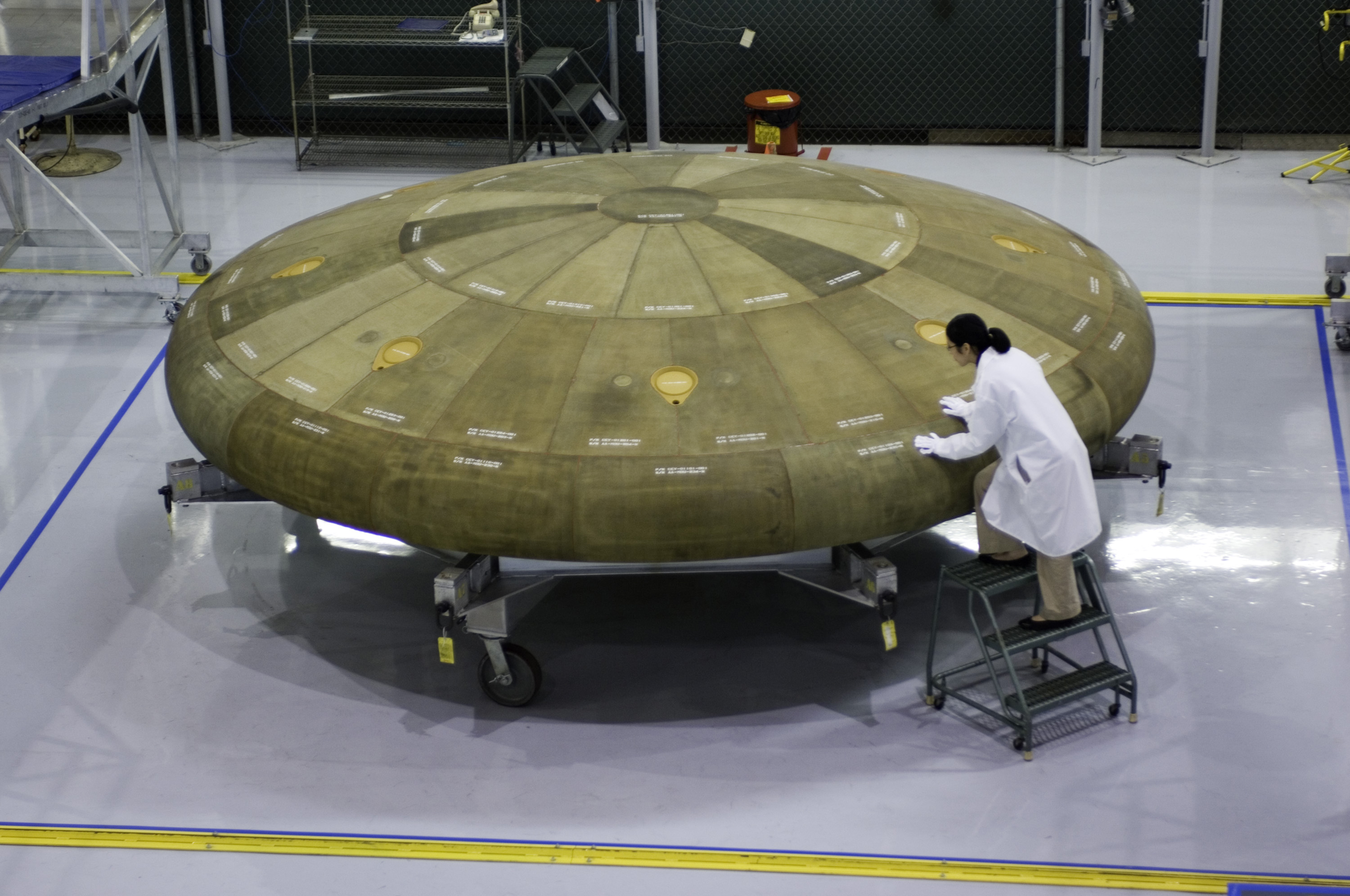
    Boeing's PICA heat shield.
  • The heat-shield seems to be the same design of fiberglass honeycomb impregnated with the an ablative material (Avcoat) as was used with Apollo.
  • The crew safety system seems to be the same technology, or a close variant ,used in Apollo-- an escape tower.   From this beefed-up Max Launch Abort System test (video, below), it appears that the Service Module may also be part of the escape system.

  • The "deep-space" radiation shielding is (apparently) the water which is carried anyway in the Service Module aft of the capsule, and polyethylene-- hardly new technology.
It is known that the aluminum exterior of a spacecraft can actually aggravate crew hazards when exposed to the impact of particles from Cosmic Rays.  Water and polyethylene tend to be the most absorbent of these particles which are available for spacecraft, but the dampening effects are limited. 
Aluminum, while helpful for minimizing x-ray and gamma ray exposure, tends to increase the potential for the crew being damaged at the cellular level, by adding part of its own matter to the already ultra-high-speed particle rays.  Like hiding under a bridge which is being bombed from the air, one may escape the bomb shrapnel only to be killed by the pieces falling from the bridge.

Alone, the radiation shielding of the MPCV seems inadequate for consideration for extremely long deep space journeys such as the more than 400 day minimum expected for a Mars voyage.

Safety, Safety, Safety

NASA is very aware of the public expectations of crew safety, and as if the public may doubt it, press releases concerning the MPCV leave one with the impression that the vehicle's development is primarily a reaction to the Challenger and Columbia disasters.  It is not.

Many are aware of NASA's contrition for the loss of those two Shuttle crews and of the agency's subsequent and earnest commitment to crew safety.  But the ghosts appear.  The literature and press releases currently available emphasize crew safety technology while remaining silent as to what a crew will be accomplishing using the vehicle.

Meanwhile, the MPCV not only lacks a place to go, it also lacks the ability to get there. 

Space Launch System

The rocket to be used to boost the crew vehicle into orbit (and beyond?) does not exist.  While still under development, is heavily weighted toward using Shuttle launch technology, and according to the CNN report, even reusing left over fuel tanks.  Current expectations are for he final design to be ready in 2016.  Certainly NASA has an indebtedness to the contractors who have kept the US manned space program flying over the decades; but there may be a cost in crew safety as well as in payload limitations if recovered solid rocket motor casings and liquid fuel tank re-usability drives the design decisions.*

Now what?

NASA is tasked and funded to continue to develop a manned craft capable of re-supply of crew and cargo for the ISS and that same vehicle is to be capable of deep space missions.  This may be the highest accomplishment NASA might be expected to achieve at this time.  The desire to continue with older technology and familiar contractors is a fair compromise in the present economic environment.

In the five or six years between today's final Space Shuttle launch and the next available manned launch from NASA, specific project missions will certainly be developed and proposed for feasibility and for funding.  Once once final equipment design is formalized, NASA's customer base can begin payload designs, just as has been done with the Shuttle.

Perhaps it will be, by 2016, men and women will board a new spacecraft with an appropriately godly name, and again capture the imagination and the hopes of human endeavor.

--WCG; 8-Jul-2011

Useful Specification:
  • Crew of four
  • 21 day mission capability with out additional supply.
  • Advanced shielding for deep space work
  • Integrated docking hardware (for ISS and future modules to be designed)


*Aerojet with Teledyne Brown announced its intent to design a competitive all-liquid-fuel rocket for the MPCV based upon its NK-33.